Historic districts and architectural review
HB 395 carves out a narrow but real exception for locally designated historic districts. In those neighborhoods, architectural review boards keep most of their traditional authority over exterior changes — including plug-in solar.
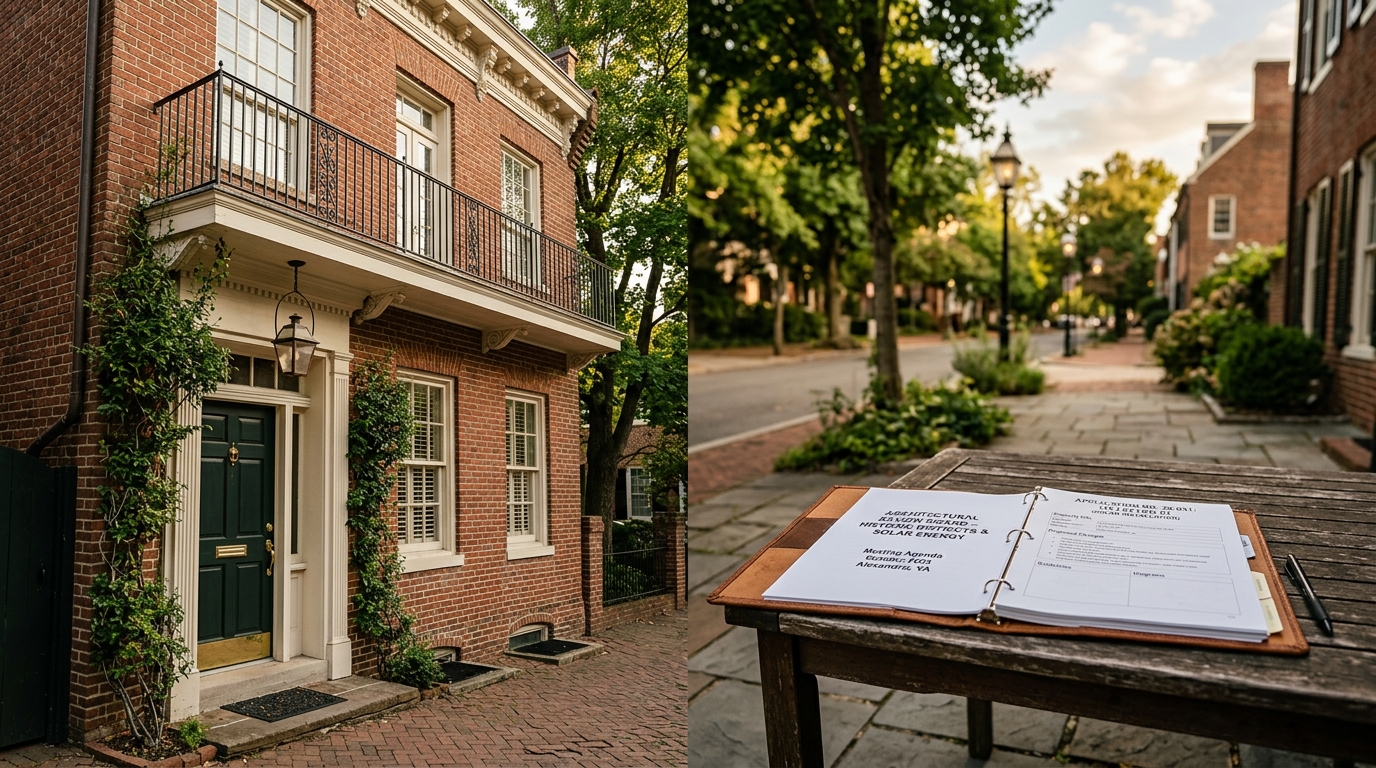
Why the exception exists
Virginia's historic district enabling statute — § 15.2-2306 — predates HB 395 by decades and reflects a durable policy judgment: local governments should be able to protect the visual character of designated districts. HB 395's drafters preserved that authority rather than pick a fight with the state's ~40 certified local historic districts.
Who it applies to
The exception is narrower than people assume. It applies only where all of the following are true:
The property sits within a district locally designated by ordinance (not merely listed on the National Register).
The district has an active review board with published guidelines.
The installation would be visible from a public right-of-way, per the local ordinance's own visibility test.
What review boards can consider
Where the exception applies, review boards can typically require:
- Approval of panel color, finish, and frame material.
- Screening from public view where feasible.
- Removal of visible cable runs.
- Placement that preserves character-defining features.
What they still cannot do is prohibit plug-in solar outright — the boards must give a meaningful path to approval. Denying every application under the guise of review is a due-process problem, not a statutory one.
Practical strategies that get approved
Boards approve plug-in solar most readily when the application anticipates their concerns:
Choose all-black or "stealth" panels — most modern microinverter panels come in monochrome frames.
Mount on the interior side of a solid railing so the panel is not visible from the street.
Run cables inside the balcony bay, not down the exterior face.
Submit a rendering (a phone photo with the panel photoshopped in is usually enough) so the board can see exactly what changes.
If your application is denied
Historic-district decisions are almost always appealable — first to the local governing body, then to circuit court. HB 395 doesn't create a new cause of action here, but it does support arguments that blanket denials are arbitrary. Consult a Virginia land-use attorney before appealing on constitutional grounds.
"The trick isn't to fight the review board. It's to design an install the board doesn't have a reason to say no to.
"
Related Reading
- Compare historic preservation guidelines with general HOA architectural review rights.
- Learn about local land-use classifications in zoning setback exceptions for plug-in hardware.
- See how other states handle historic solar guidelines in our state-by-state historic preservation rules.
Stay updated on Virginia balcony solar
Get notified when the State Corporation Commission issues new HB 395 regulations, forms, or legal updates.
Was this article helpful?
Your feedback helps us keep this guide accurate and easy to use.