How Virginia's HB 395 stacks up against Utah's HB 340
The two earliest US plug-in solar statutes take different routes to the same destination. Virginia leans consumer-protection; Utah leans equipment.
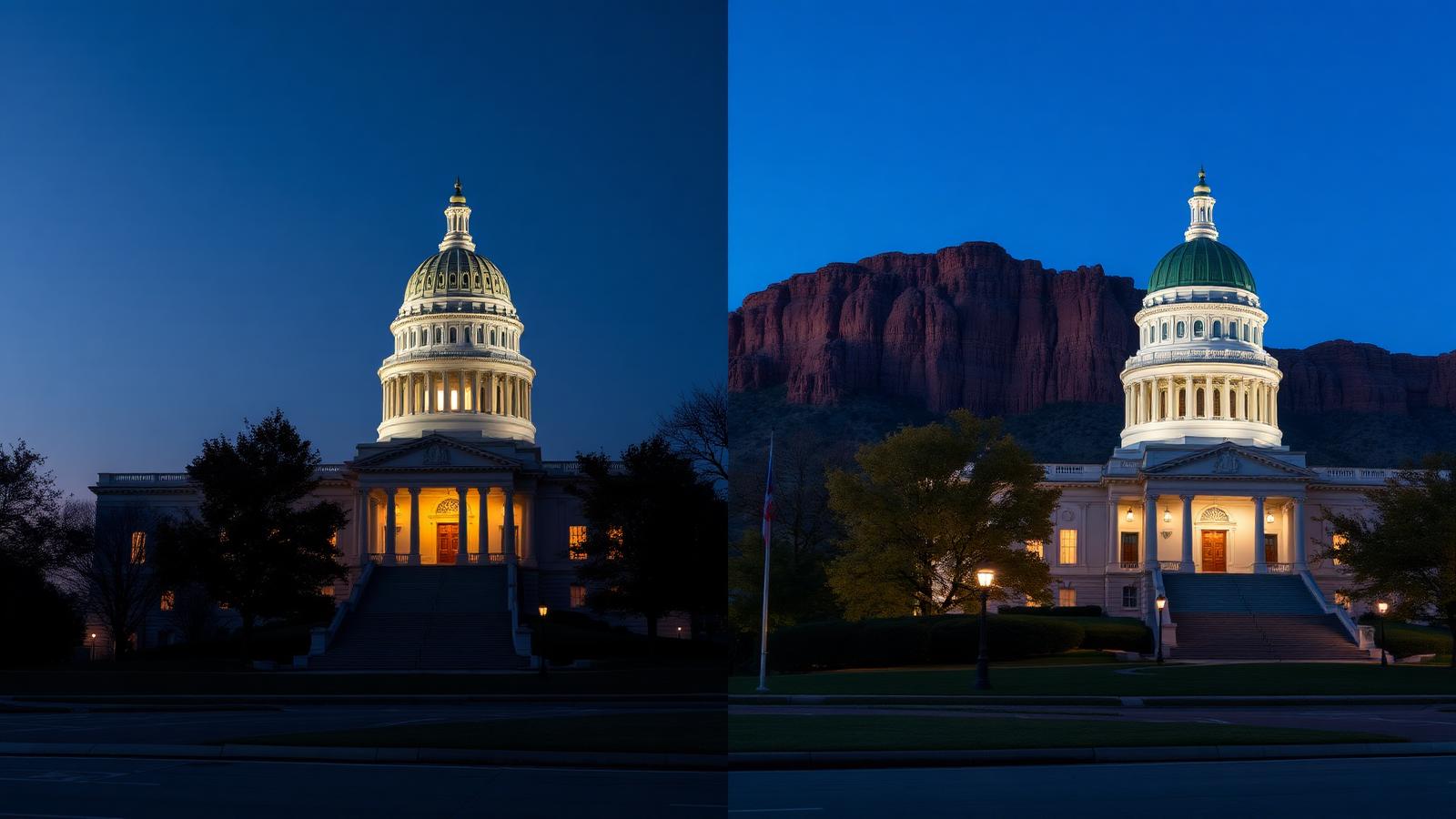
Context
Utah beat Virginia to the punch on effective date but not on passage. HB 395 cleared the Virginia General Assembly in 2024 with a delayed effective date to give the SCC time to build a rulemaking process. Utah's HB 340 passed a year later and took effect almost immediately — but without a comparable stakeholder process.
The result: Utah residents can plug in today; Virginia residents get a more thoroughly-negotiated set of protections in 2027.
Side-by-side
| Provision | Virginia HB 395 | Utah HB 340 |
|---|---|---|
| System cap (AC) | 1,200 W | 1,200 W |
| Required certification | UL 3700 | UL 3700 |
| Landlord restriction | ≥ 4-unit owners cannot unreasonably refuse | Silent — landlord may refuse |
| HOA restriction | Cannot prohibit; may regulate placement | Cannot prohibit; may regulate placement |
| Interconnection agreement | Not required | Not required |
| Utility notification | Voluntary, standardized form | Mandatory notification to utility |
| Net metering | Not eligible | Not eligible |
| Historic districts | Local ARB may impose reasonable conditions | Local historic authority may prohibit |
| Effective date | Jan 1, 2027 (protections) | May 1, 2025 |
What Virginia got right
Three provisions where HB 395 goes further than Utah:
Landlord restrictions with teeth. Virginia bars landlords owning 4+ units from unreasonably refusing plug-in solar. Utah is silent, meaning a Utah tenant's landlord can refuse for any reason or none.
Voluntary utility notification. HB 395 makes notification optional and standardized. HB 340 makes it mandatory, which introduces a compliance step Virginia doesn't impose.
Historic-district balance. Virginia allows local ARBs to impose reasonable conditions but not outright bans; Utah preserves local prohibition authority entirely.
What Utah got right
Immediate effect. HB 340 was live within 90 days of passage. Virginia residents wait until 2027 for the consumer-protection provisions.
Utility notification as data. Mandatory notification gives Utah utilities a clean dataset for distribution planning. Virginia's voluntary approach may leave utilities guessing at system saturation.
Related Reading
- Consult our comprehensive 5-state legal breakdown in detailed multi-state comparison guide.
- Read about Virginia consumer protection enforcement in our report on the Attorney General opinion on HOA enforcement.
- Learn why state statutes set specific capacity limits in 1,200 W AC cap rationale.
Stay updated on Virginia balcony solar
Get notified when the State Corporation Commission issues new HB 395 regulations, forms, or legal updates.
Was this article helpful?
Your feedback helps us keep this guide accurate and easy to use.