Why 1,200 W AC, and not more?
Virginia's HB 395 caps plug-in solar at 1,200 W AC at the microinverter output. That number isn't arbitrary — it emerges from a specific intersection of electrical safety standards, grid protection logic, and policy compromise. Here's where it came from and what it means in practice.
The short answer
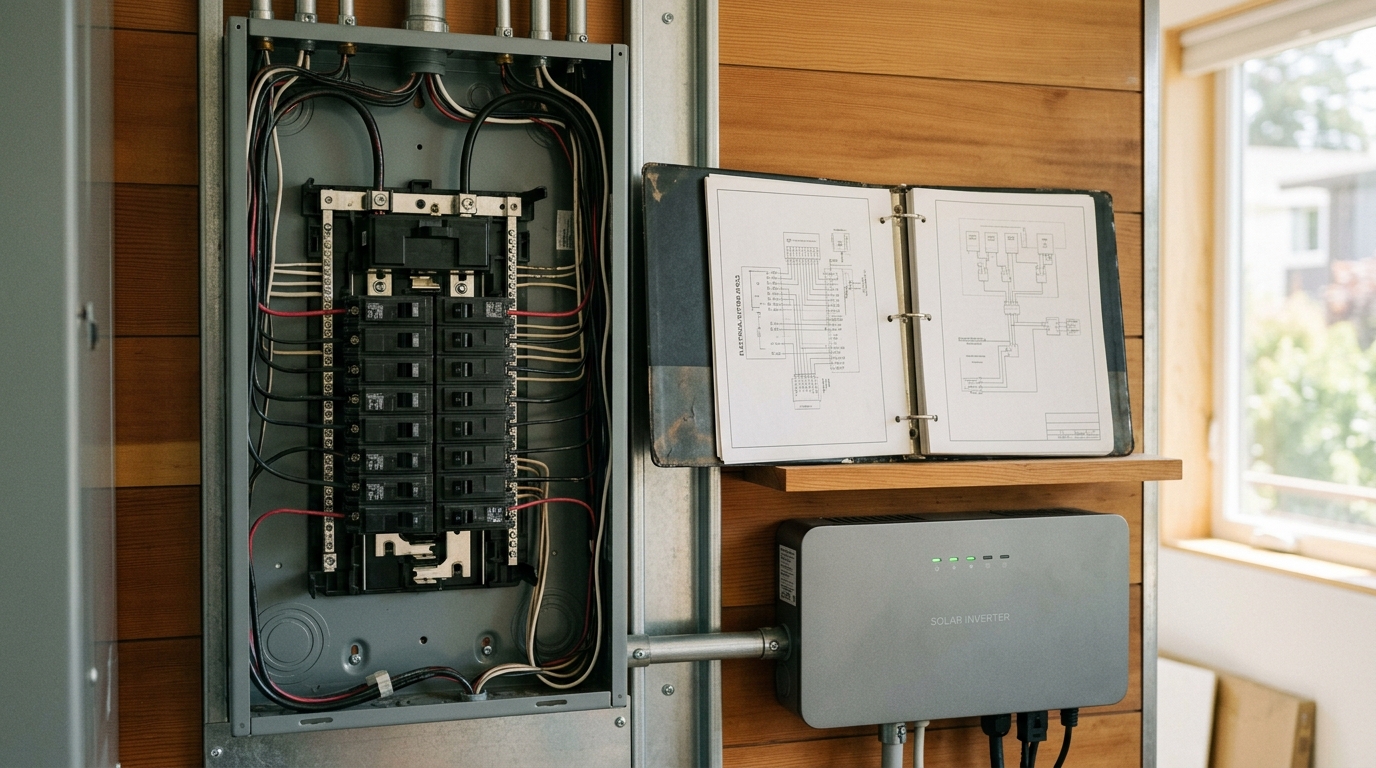
The 1,200 W AC cap in HB 395 reflects the maximum safe and practical output for a plug-in solar system connected to a standard 15 or 20 amp residential outlet. At 1,200 W, a system draws close to the continuous load rating of a 15-amp circuit (1,440 W at 120V), with the remaining headroom ensuring the circuit isn't run at sustained capacity. Germany's plug-in solar framework uses 600 W; some U.S. proposals have suggested 2,000 W. Virginia's 1,200 W represents a middle-ground policy choice that maximizes practical output within safe electrical limits.
Where 1,200 W comes from
The 1,200 W cap in HB 395 didn't emerge from a single technical decision — it's the product of the legislative drafting process, which balanced input from utilities, electrical safety advocates, manufacturer lobbyists, and the policy precedents set in other jurisdictions.
The starting point in drafting discussions was 800 W — the cap Germany raised its Balkonkraftwerk standard to in May 2024, and a round number that aligns neatly with two standard 400 W panels. Consumer advocates and manufacturer representatives pushed for a higher ceiling, citing that U.S. homes have 120/240V service and the practical outlet constraints are different from German electrical infrastructure. Utilities argued for 600 W, matching Germany's original limit.
The 1,200 W compromise emerged from the Senate Commerce and Labor Committee's markup of the bill in January 2025. At 1,200 W, the cap allows for the most capable commercially available plug-in solar kits without exceeding the continuous load rating of a standard 15-amp outdoor outlet — a threshold that electrical engineers on the committee flagged as the practical upper bound.
Electrical safety logic: the 80% rule
The National Electrical Code (NEC) requires that electrical circuits not be loaded above 80% of their rated capacity for continuous loads — defined as loads that run for more than three hours at a time. This "80% rule" is the safety margin that keeps wiring from overheating under sustained use.
A standard 15-amp residential circuit at 120V can carry a maximum of 1,800 W. Applying the 80% continuous load rule, the safe ceiling for a continuous load on that circuit is 1,440 W. A 1,200 W plug-in solar system feeding power into that circuit is within that safe margin — it's generating power into the circuit, not drawing it, but the net effect on the circuit's capacity utilization is the same.
At 1,200 W, the system also leaves room for the circuit to simultaneously carry other load — a small appliance, a phone charger — without approaching the 80% limit. This is important because the outdoor outlet where plug-in solar typically connects is often shared with other occasional uses.
A 20-amp outlet (common for outdoor circuits in newer construction) raises the capacity ceiling. The 80% continuous load limit on a 20-amp/120V circuit is 1,920 W. A 1,200 W system is well within that margin even on a 15-amp circuit, making the cap conservative enough to work safely on the full range of residential wiring infrastructure.
How Virginia's cap compares to other jurisdictions
| Jurisdiction | Plug-in solar cap | Basis / notes |
|---|---|---|
| Germany (Balkonkraftwerk) | 800 W AC (raised from 600 W, May 2024) | Aligns with 230V European outlets; 800 W recently allowed |
| Utah (HB 346, 2024) | 2,000 W AC | Higher cap; 240V connections permitted in some configurations |
| Maine (LD 1469, 2023) | 1,000 W AC | Close to Virginia's cap; 120V outlet connection only |
| Colorado (HB 24-1239) | 1,500 W AC | Allows 20A outlet connections explicitly |
| Virginia (HB 395, 2025) | 1,200 W AC | 120V outlet; UL 3700 required; microinverter only |
| Federal (no national standard) | N/A | No federal plug-in solar framework exists as of mid-2026 |
Virginia's 1,200 W sits comfortably in the middle of U.S. state frameworks and above Germany's original 600 W limit, but below Utah's more permissive 2,000 W ceiling. The practical difference between 1,200 W and 2,000 W is meaningful in output terms — a maxed-out Utah system could produce 40% more annual energy — but the 1,200 W limit reflects a deliberate decision to keep systems within safe 15-amp circuit parameters without requiring assessment of the outlet's actual amperage.
What the cap means practically
For consumers buying equipment, the 1,200 W cap means the inverter's AC output nameplate rating cannot exceed 1,200 W. Panel DC ratings can be higher — panels with a DC capacity of 400–500 W each are common, and a two-panel kit will have a combined DC capacity of 800–1,000 W — as long as the inverter clips or converts to 1,200 W or less AC.
In practice, most commercially available plug-in solar kits are designed around either a single 400 W panel with a 400 W microinverter, or dual panels with a 600–800 W dual microinverter. Kits at the 1,200 W ceiling (e.g., three 400 W panels with a 1,200 W microinverter) are available but less common in the balcony solar market, because three panels require more mounting space than most balconies allow.
The cap also means the law doesn't change as panel technology improves. A future panel that outputs 500 W DC but connects to a 1,000 W AC microinverter is still compliant. The cap is on the inverter output, not the panel technology.
Why not higher? The policy and utility arguments
The utilities' argument for a lower cap — and their opposition to raising it beyond 1,200 W — rests on two concerns: circuit safety and grid visibility.
On circuit safety: as output approaches or exceeds the continuous safe load limit of a 15-amp circuit, the risk of wiring overheating increases if the circuit is simultaneously carrying other loads. A 1,200 W inverter feeding into a circuit that's also running a 500 W appliance is putting 1,700 W through a 1,440 W-rated circuit. At higher caps, this risk increases.
On grid visibility: plug-in solar systems are invisible to the grid in a way that interconnected rooftop systems are not. Utilities can't see how much generation is happening from HB 395 systems. At 1,200 W per system, the aggregate impact on any distribution circuit from a cluster of HB 395 installations is manageable for distribution planning purposes. At 2,000 W or higher, dense urban areas with high adoption rates could create unmodeled generation pockets that affect power quality.
These concerns aren't unfounded, but they're also forward-looking — Virginia doesn't have enough plug-in solar installed today to create material distribution challenges. The 1,200 W cap reflects a conservative posture appropriate to an early-stage deployment, with the expectation that the cap might be revisited in future legislative sessions as deployment data accumulates.
The outlet constraint: a practical ceiling below the legal one
The 1,200 W legal cap is the maximum, but many installations will operate at lower practical ceilings set by the outlet they connect to. A 15-amp outdoor outlet on an older building may share a circuit with interior lights or other loads, meaning the net available capacity for sustained solar output is less than the full 1,440 W circuit rating.
In practice, this means a 1,200 W inverter may need to be throttled — or may throttle itself automatically through the UL 3700 safety system — if the circuit's total load approaches its rated limit. Most modern microinverters include circuit monitoring that adjusts output dynamically. The 1,200 W rating is a maximum; actual output at any given moment depends on both solar irradiance and the circuit's available headroom.
Common questions
Can I connect two separate HB 395 systems to get 2,400 W?
No — HB 395's cap applies per installation, but the statute's intent is clearly not to allow daisy-chaining multiple systems to circumvent it. Installing two separate 1,200 W systems in one unit would raise questions about circuit safety (both would be drawing from the same residential wiring) and might constitute a technical violation of the law's spirit even if each individual system is nominally compliant.
Why does Germany use 800 W while Virginia uses 1,200 W?
The difference is primarily electrical infrastructure. German residential outlets operate at 230V with 16A circuits. The safe continuous load ceiling on a German household circuit is approximately 2,760 W — so 800 W is well within safe limits but is a conservative policy choice. U.S. outlets at 120V/15A have a lower absolute capacity. Virginia's 1,200 W is roughly equivalent to Germany's 800 W as a proportion of the circuit's safe ceiling.
Will the cap increase in future legislation?
It's possible. Virginia legislators introduced a placeholder provision in HB 395 requiring a review of the cap after 2027, informed by SCC deployment data. Whether any 2028 or 2029 session raises the cap depends on that data and on the political landscape at the time.
Does a system rated at exactly 1,200 W AC pass the cap?
Yes — the HB 395 cap is "1,200 watts or less." A system rated at exactly 1,200 W is compliant. The rating on the microinverter nameplate is what matters.
Sources: Virginia HB 395 (2025 Session); Code of Virginia § 55.1-1234.1; National Electrical Code (NEC) 2023 — Article 210 (Branch Circuits); German Plug-In Solar Ordinance (Balkonkraftwerk-Verordnung, May 2024); Utah HB 346 (2024); Maine LD 1469 (2023); Colorado HB 24-1239; UL Standard 3700 (2023 edition).
This article is for general information. For specific electrical questions about your installation, consult a licensed electrician familiar with Virginia's residential wiring standards.
Last updated: July 31, 2026
Related Reading
- Learn how inverter sizing limits peak output in our guide to microinverter sizing and AC conversion.
- Calculate expected annual energy savings in our analysis of system sizing and annual financial return.
- Compare Virginia's 1,200 W ceiling with other states in Virginia and Utah statutory capacity limits.
Stay updated on Virginia balcony solar
Get notified when the State Corporation Commission issues new HB 395 regulations, forms, or legal updates.
Was this article helpful?
Your feedback helps us keep this guide accurate and easy to use.