Hoymiles HiFlow Pro is the first UL 3700 plug-in microinverter in the US
The certification lands a year before Virginia's HB 395 consumer protections take effect on January 1, 2027 — and it's the first hardware most Virginians will legally be able to plug in.
What happened
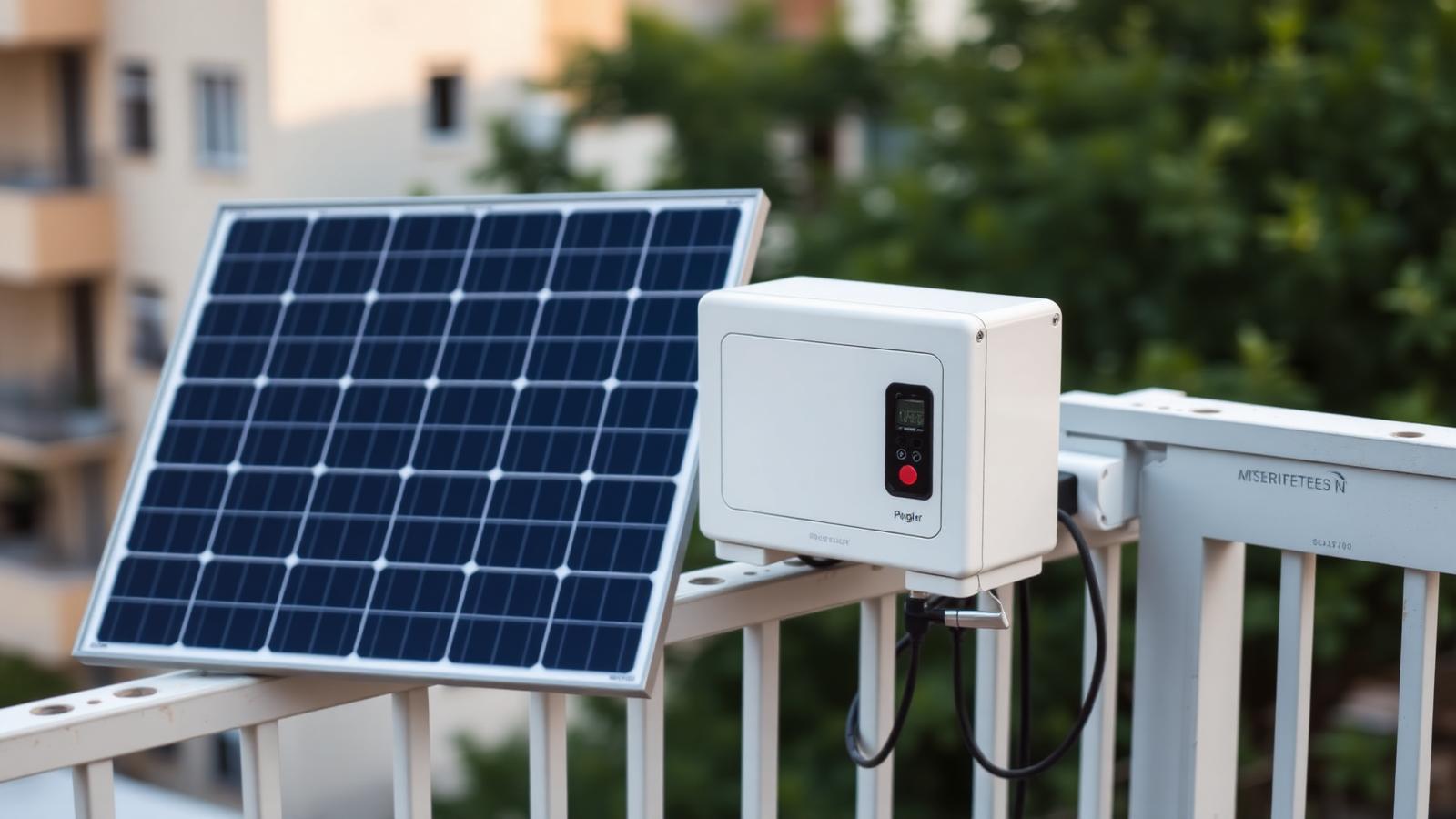
Hoymiles, a Chinese microinverter manufacturer best known for its residential rooftop products, announced this week that its new HiFlow Pro is the first plug-in solar microinverter in the United States to carry a UL 3700 listing — the safety standard purpose-built for balcony and outlet-connected solar systems.
The company is selling the unit as part of two starter kits: a 180 W single-panel kit at $499, and a 360 W two-panel kit at $700. Up to four HiFlow Pro inverters can be plugged into separate household outlets in parallel, hitting a combined ceiling of 1,200 W AC.
Why UL 3700 matters
UL 3700 is the North American safety standard for plug-in photovoltaic systems — the "balcony solar" category that has spread across Germany and is now moving through US state legislatures. It tests the complete product (panel, microinverter, cable, plug) as one system against the failure modes that make outlet-fed solar different from rooftop solar: anti-islanding, backfeed on an unplugged cord, thermal behavior at the AC cap, and ground-fault protection independent of the building's GFCI.
Eight US states — Colorado, Connecticut, Maine, Maryland, New Hampshire, Utah, Vermont, and Virginia — now have plug-in solar legislation on the books. Every one of them either references UL 3700 directly or delegates the safety standard to the state regulator, who is expected to adopt it. Without a UL 3700-listed product on the market, the laws had nothing to actually enable.
Inside the hardware
Hoymiles is publishing a fairly aggressive spec sheet. The most relevant numbers for a Virginia buyer:
| Spec | HiFlow Pro | What HB 395 / UL 3700 asks for |
|---|---|---|
| AC output per unit | 360 W | ≤ 1,200 W AC total system |
| Max system (parallel) | 4 units / 1,200 W | 1,200 W cap |
| Dynamic efficiency | 95.5% | Not specified |
| Static efficiency | 99.8% | Not specified |
| Anti-islanding disconnect | Output drops < 34 V within 1 second | Rapid disconnect on grid loss |
| Enclosure | NEMA Type 6 / IP67 | Outdoor-rated |
| Operating range | -40°F to 149°F | Outdoor environmental |
| Setup | Bluetooth + Wi-Fi, ~1 minute | Owner-installable |
Two details are worth calling out. First, the sub-second voltage drop on disconnection is the exact behavior UL 3700 is written to force — it's what keeps the exposed plug pins from becoming a shock hazard when a resident yanks the cord. Second, the NEMA Type 6 / IP67 rating means the unit is intended to sit outdoors on a balcony or wall, not tucked inside behind a window.
What it means for Virginia
For most of 2026, the practical answer to "can I buy a HB 395-compliant kit yet?" has been "not really." That changes now, with three specific consequences:
Retail availability tracks certification. Large US retailers have said they won't stock plug-in kits until a UL 3700 product exists. That product now exists. Expect listings on Amazon, Home Depot, and specialty solar retailers through Q3.
The manufacturer disclosure label under HB 395 gets real. From July 1, 2026, every plug-in system sold in Virginia must carry a label including the UL 3700 certification number. Hoymiles is the first manufacturer that can print one.
Landlord and HOA objections lose their strongest argument. "There's no certified equipment" was the cleanest reason to refuse a tenant request. It no longer holds.
Caveats and open questions
A few things this announcement doesn't answer:
Panel bundling. The UL 3700 listing covers the complete system as tested. Swapping in a different panel voids the listing. If you buy the microinverter alone and pair it with a random panel, you're outside the certification — and outside HB 395 compliance.
Dominion notification. Dominion's draft voluntary-notification form still hasn't been finalized. The HiFlow Pro's Wi-Fi telemetry may make notification simpler, but it doesn't change the requirement.
ROI at Virginia rates. Hoymiles' "two-year payback" claim assumes ideal conditions and higher retail electricity rates than Dominion charges. Realistic Virginia payback for a 360 W kit is closer to 6–8 years — still positive, but not two.
Second manufacturers. Being first isn't being only. At least two other manufacturers are in the UL 3700 queue. Prices should come down as competition arrives through 2027.
For a full walk-through of what UL 3700 tests for and why it exists as a separate standard from rooftop solar's UL 1741, see our explainer on UL 3700 certification. For the legal timeline, our HB 395 timeline breakdown covers what changes on July 1, 2026 versus January 1, 2027.
Related Reading
- Read about the technical standards governing certified microinverters in our guide to UL 3700 safety certification requirements.
- Track retail availability in our report on retail rollout of UL 3700 kits.
- Learn how panel-level inverters operate in microinverter technology standards.
Stay updated on Virginia balcony solar
Get notified when the State Corporation Commission issues new HB 395 regulations, forms, or legal updates.
Was this article helpful?
Your feedback helps us keep this guide accurate and easy to use.