Electric co-ops and municipal utilities
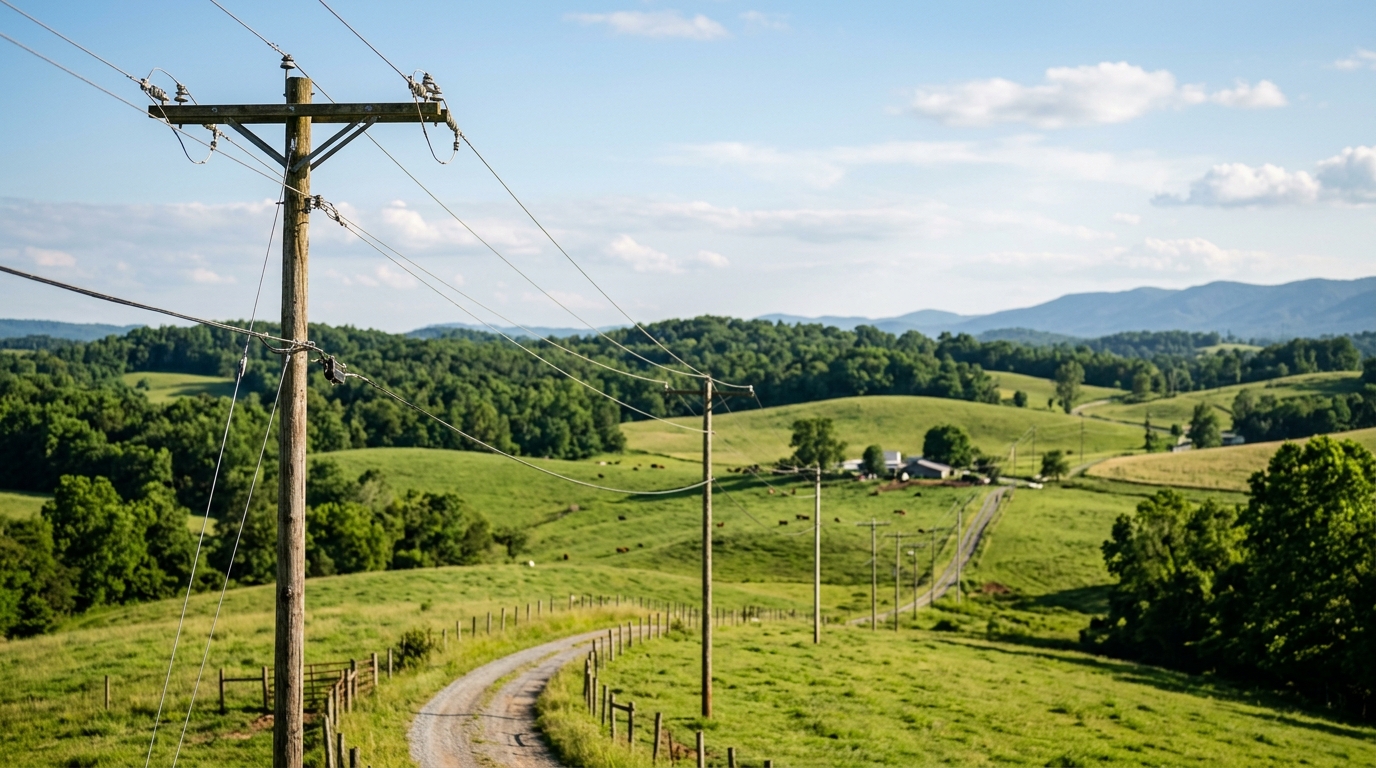
About 15% of Virginia electricity customers are served by rural electric cooperatives or city-owned utilities rather than Dominion or APCo. HB 395's legal framework applies to all of them — but each has its own implementation approach, and some are further along than others.
The bottom line
HB 395 applies to all Virginia utilities — investor-owned, cooperative, and municipal — equally. No utility can require an interconnection agreement for a compliant plug-in solar system, and no utility can deny service based on HB 395 system ownership. Co-ops and municipal utilities have more varied implementation approaches than Dominion or APCo: some have developed formal voluntary notification processes; others handle HB 395 inquiries through general customer service. In every case, the legal framework is the same.
Virginia's co-ops and municipal utilities
Virginia has thirteen rural electric cooperatives and more than a dozen municipal electric utilities. Together they serve approximately 15% of the state's electricity customers — mostly in rural areas, smaller cities, and regions historically underserved by the investor-owned utilities.
The largest cooperative by customer count is NOVEC (Northern Virginia Electric Cooperative), which serves parts of Fairfax, Loudoun, Prince William, and Fauquier counties — including some of the most densely populated areas in the state. NOVEC is unusual among Virginia co-ops in that it serves a largely suburban and exurban customer base where balcony solar is a realistic option for many members.
The other cooperatives are generally smaller and more rural: Rappahannock Electric Cooperative (central Virginia), BARC Electric (Rockbridge and Bath counties), Craig-Botetourt Electric, Mecklenburg Electric, and Old Dominion Power (southwest Virginia), among others.
Municipal utilities — city-owned systems operating outside the investor-owned and co-op frameworks — include Bristol Virginia Utilities, Harrisonburg Electric Commission, and the electric systems operated by a handful of smaller Virginia cities and towns.
Legal framework: same statute, different operational structures
HB 395 uses the term "electric utility" to include all Virginia utilities subject to SCC jurisdiction — investor-owned, cooperative, and municipal. The statute's requirements (no interconnection agreement for compliant systems, behind-the-meter classification, no net metering eligibility) apply equally across all three types.
The operational differences arise because co-ops and municipal utilities have smaller customer service teams, sometimes older metering infrastructure, and governance structures that are less standardized than the IOUs. A co-op with 20,000 members doesn't have the same capacity to develop a dedicated HB 395 notification portal as Dominion, which serves more than two million Virginia customers.
The SCC's stakeholder working group included NOVEC and Rappahannock Electric as co-op participants. Smaller co-ops were not individually represented but were given the opportunity to comment on draft forms and label specifications.
NOVEC
NOVEC has been among the most engaged co-ops in the HB 395 stakeholder process. It participated in the SCC's working group and has circulated its own member FAQ on plug-in solar, published in June 2026.
NOVEC's voluntary notification process is available through its online member portal (similar to Dominion's approach) and by phone. The form requests the system model, certification number, AC output rating, and installation address. NOVEC's FAQ notes that its AMI (smart) meter deployment is complete for the vast majority of its service territory, meaning backfeed accuracy isn't a concern for most NOVEC customers the way it is for some APCo rural customers.
NOVEC serves areas where HOA density is high — much of suburban Northern Virginia is association-governed. The co-op's FAQ explicitly addresses the landlord and HOA notification question, noting that NOVEC's voluntary notification is separate from and doesn't substitute for any HOA or landlord notice HB 395 requires.
Rappahannock Electric Cooperative
Rappahannock Electric serves a large swath of central Virginia including Fredericksburg, Charlottesville (portions), and the Northern Neck. Its HB 395 approach is more basic than NOVEC's: members can notify via phone or email, and the co-op's general customer service team handles inquiries.
Rappahannock has not published a dedicated member FAQ as of mid-2026, though it has updated its internal training materials and its customer service team is familiar with HB 395. Members with questions about notification can reach the co-op at its general residential service line.
Rappahannock's meter estate is a mix of AMI smart meters (roughly 70% of members as of early 2026) and older meters in more rural portions of its territory. The co-op has committed to completing its smart meter transition by late 2026.
BARC, Craig-Botetourt, and smaller co-ops
The smaller Virginia co-ops — BARC Electric, Craig-Botetourt, Mecklenburg Electric, and others — serve areas where multifamily rental housing is relatively rare and balcony solar adoption is expected to be lower than in urban and suburban areas. Their HB 395 implementation is correspondingly less developed.
For members of smaller co-ops, the practical approach is to call the co-op's member service number and ask about its HB 395 notification process. All co-ops are legally required to comply with HB 395; even if a small co-op hasn't built a dedicated notification system, a phone call creating a documented record of voluntary notification satisfies the spirit of the requirement.
| Utility | Type | Voluntary notification method | Member FAQ published? |
|---|---|---|---|
| Dominion Energy Virginia | Investor-owned | Standalone online form | Yes (June 2026) |
| Appalachian Power (APCo) | Investor-owned | Phone or online account portal | Yes, draft (May 2026) |
| NOVEC | Cooperative | Online member portal or phone | Yes (June 2026) |
| Rappahannock Electric | Cooperative | Phone or email | No — general customer service |
| BARC Electric | Cooperative | Phone only | No |
| Craig-Botetourt Electric | Cooperative | Phone only | No |
| Bristol Virginia Utilities | Municipal | Phone or utility office | No |
| Harrisonburg Electric | Municipal | Phone or online | In development |
Municipal (city-owned) utilities
Virginia's municipal electric utilities — those owned and operated by cities and towns rather than investor-owned companies or co-ops — are subject to HB 395 in the same way as all other Virginia utilities. The SCC oversees municipal utility rates and practices, which is the same regulatory relationship that makes HB 395's requirements binding on them.
Bristol Virginia Utilities and Harrisonburg Electric Commission are the largest municipal electric utilities in the state. Both have acknowledged HB 395 applicability and are developing their voluntary notification processes. As of mid-2026, neither has published a formal member FAQ, but both utilities' customer service teams have received HB 395 training.
Smaller city-operated electric systems — such as those operated by Radford, Manassas, Manassas Park, and a handful of other Virginia localities — are at varying stages of readiness. Members of these systems who want to install before January 2027 should call their utility's customer service department to ask about its voluntary notification process.
How to find your utility
Virginia doesn't have a single publicly maintained map of all utility service territories. The SCC's website has historical rate filings and service territory descriptions, but they aren't always user-friendly for a quick lookup. The fastest options:
- Electric bill. The utility name is on the bill. If it's not Dominion Energy Virginia or Appalachian Power, it's either a co-op or a municipal utility.
- Virginia Electric Cooperatives website. The Virginia, Maryland & Delaware Association of Electric Cooperatives (VMDAEC) maintains a map at vmdaec.com that shows each co-op's service territory.
- Dominion or APCo territory maps. Both companies publish service area maps. If the address isn't in those service areas, it's served by a co-op or municipal utility.
- Local city or county government. Many Virginia locality websites identify which electric utility serves the area in their utilities or services section.
Common questions
Does my co-op have to comply with HB 395?
Yes — HB 395 applies to all Virginia electric utilities subject to SCC jurisdiction, including cooperatives and municipal utilities. The co-op cannot require an interconnection agreement, cannot deny service based on plug-in solar ownership, and cannot provide net metering credits for HB 395 systems.
My co-op doesn't have an online notification form. What should I send?
Call the co-op's customer service number and ask to speak with someone about HB 395 plug-in solar. Provide the system model, UL 3700 certification number, AC output rating, and installation address. Ask for a reference or confirmation number and document the call in writing. A written email follow-up to the call — summarizing what was discussed and confirmed — creates a useful paper trail.
Do co-op members have different rights than Dominion customers under HB 395?
No — the statute doesn't distinguish between utility types. Co-op members have the same rights: no interconnection agreement required, behind-the-meter classification, no net metering, and no service disconnection based on HB 395 system ownership.
My co-op board has expressed opposition to solar. Can it block members from installing?
A co-op's board can express views on policy but cannot override a state statute. If a co-op board is using its governance position to make HB 395 compliance difficult for members, that's a governance issue to raise through the co-op's member participation process — and, if necessary, the SCC's consumer services complaint process.
Sources: Virginia HB 395 (2025 Session); Code of Virginia § 56-594; NOVEC HB 395 Member FAQ (June 2026); Virginia, Maryland & Delaware Association of Electric Cooperatives (VMDAEC); SCC HB 395 Stakeholder Docket (PUR-2025-00147).
This article is for general information and does not constitute legal advice.
Last updated: July 31, 2026
Related Reading
- Compare co-op requirements with investor-owned utilities in our guide to Appalachian Power rules.
- See how Virginia's largest investor-owned utility handles notice in Dominion Energy notification process.
- Understand how annual production varies across regions in seasonal solar generation curves in Virginia.
Stay updated on Virginia balcony solar
Get notified when the State Corporation Commission issues new HB 395 regulations, forms, or legal updates.
Was this article helpful?
Your feedback helps us keep this guide accurate and easy to use.