Seasonal performance across Virginia
Virginia's climate is friendlier to solar than most residents assume. A well-placed balcony system in Norfolk beats one in Roanoke, but the gap is smaller than the gap between good and bad orientation on the same balcony.
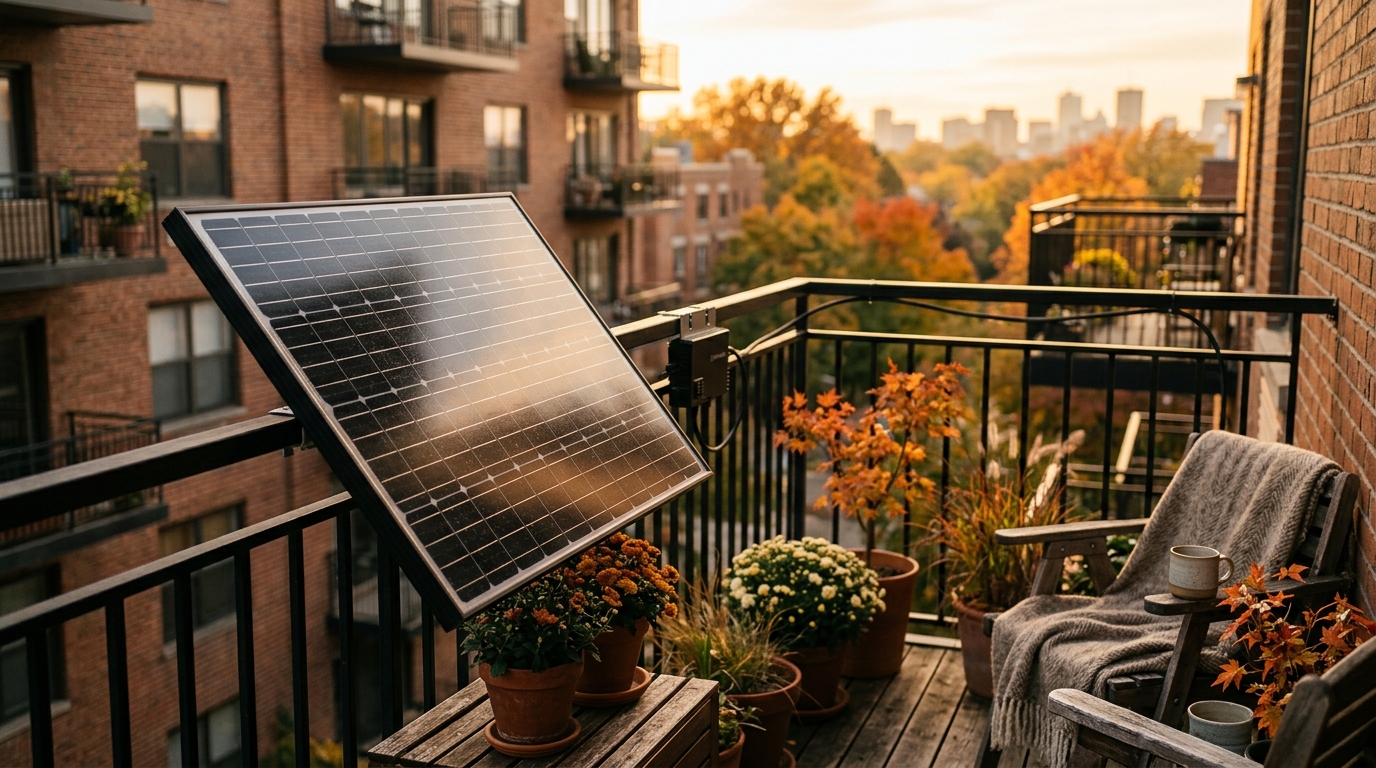
The headline numbers
A well-oriented 1,200 W plug-in system in Virginia produces roughly 1,400–1,700 kWh per year. That's about 3.8–4.7 kWh per day averaged across all seasons — enough to cover a household's daytime baseline load (fridge, router, standby electronics) and a chunk of a discretionary daytime load (laptop, small AC unit).
Output by city
Using NREL's PVWatts model with a 1,200 W south-facing, 20°-tilt system on an unshaded balcony:
| City | Annual kWh | Daily average | Peak month (kWh) | Low month (kWh) |
|---|---|---|---|---|
| Norfolk | 1,690 | 4.6 | 192 (Jul) | 94 (Dec) |
| Richmond | 1,640 | 4.5 | 188 (Jul) | 89 (Dec) |
| Charlottesville | 1,610 | 4.4 | 185 (Jul) | 86 (Dec) |
| Northern Virginia (Arlington) | 1,580 | 4.3 | 182 (Jul) | 82 (Dec) |
| Roanoke | 1,540 | 4.2 | 178 (Jul) | 79 (Dec) |
The spread between Norfolk and Roanoke is about 9%. Not nothing, but small enough that the choice of balcony orientation matters more.
Orientation matters more than latitude
Compare a Richmond system across four orientations:
| Orientation | Annual kWh | vs. south-facing |
|---|---|---|
| South | 1,640 | — |
| Southwest | 1,570 | −4% |
| East or West | 1,240 | −24% |
| North (vertical wall) | 620 | −62% |
Winter vs. summer
Virginia's peak solar month is July. Its worst is December — output drops to about 50–55% of the annual daily average. Two counterintuitive implications:
Winter isn't dead. Even December delivers ~2.5 kWh per day on average, easily covering fridge + standby loads.
Cold helps output. Panels are more efficient at lower temperatures. A cold, clear February day can beat a hazy, hot July afternoon on a per-hour basis.
Shading, the silent killer
Balcony solar's biggest performance risk isn't cloudy weather — it's partial shade from a neighboring building, a tree, or the balcony above. A single microinverter panel that spends four hours per day in shade can lose 30–45% of its annual output.
Before installing, spend a Saturday watching the balcony:
- Note when direct sun first hits it in the morning.
- Note when it moves off.
- Look up during peak hours — is a balcony above you blocking overhead sun?
You want at least 4 hours of unobstructed sun between 10 AM and 3 PM for the numbers above to hold. Less than that, and you should recalibrate expectations before spending on hardware.
Related Reading
- See how seasonal production translates into bill savings in annual energy yield and financial ROI.
- Learn about utility policies in rural service areas in electric co-op rules across Virginia.
- Understand how system size caps affect seasonal output in 1,200 W AC power cap.
Stay updated on Virginia balcony solar
Get notified when the State Corporation Commission issues new HB 395 regulations, forms, or legal updates.
Was this article helpful?
Your feedback helps us keep this guide accurate and easy to use.